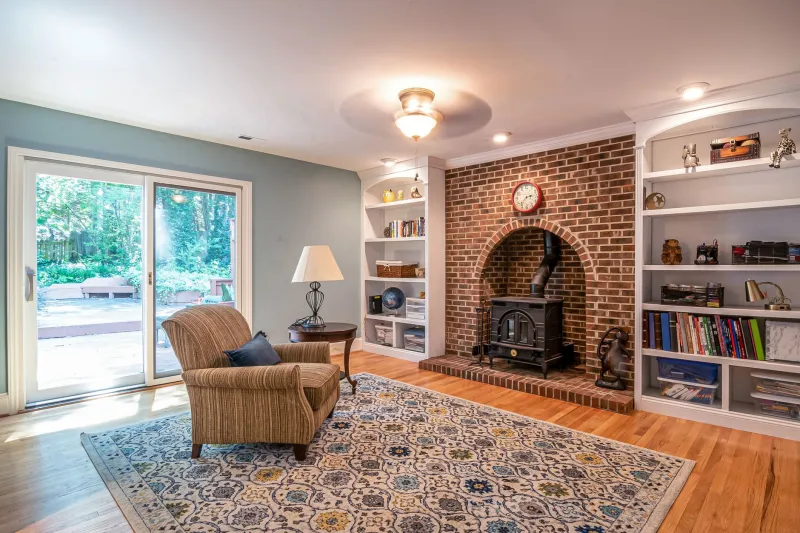
The Spare Room Reclaimed: Britain’s Shift from Guest Accommodation to Everyday Use
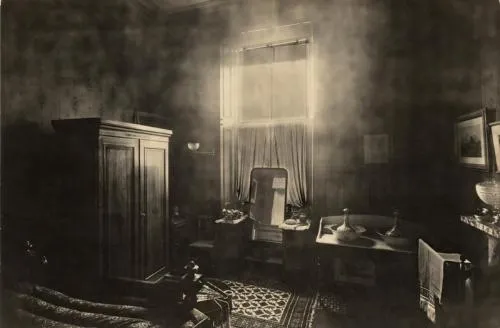
Photo: George Washington Wilson, Public domain, via Wikimedia Commons
The spare bedroom has long been a peculiar British institution: a room kept immaculate for visitors who arrive perhaps twice a year, and otherwise closed off like a museum display. In 2026, that arrangement is beginning to look less like hospitality and more like wasted floor area. Hybrid working has settled into routine, homes are smaller, and the cost of keeping a room in suspended animation is harder to justify. Designers across the UK report that the spare room is being reclaimed—not as a guest room with a desk squeezed in, but as a genuinely useful part of the home.
From Shrine to Studio
Remote work is only part of the explanation. The deeper shift is social: fewer households maintain a formal guest room for occasional relatives; more are willing to host in a room that does something else for most of the year. The spare room is becoming a home office, a craft studio, a reading room, a snug, a dressing room. The change is pragmatic, but it is also design-led. Homeowners want rooms that earn their keep.
In Bristol, interior designer Ruth Ackerley has noticed the change in Victorian terraces where the third bedroom was once reserved for grandparents. ‘The room was often the darkest and least-used in the house,’ she says. ‘Now clients ask for a proper desk position, good task lighting and storage that can absorb paperwork at the end of the day. The guest bed still exists, but it is no longer the organising principle.’ Her solution is often a wall bed set into joinery, with a fixed desk beside it and a tall cupboard for files and bedding. The room reads as a study first and a guest room second.
In Edinburgh, the box room has become a reading room. A built-in window seat, shallow bookshelves and a linen curtain that can be drawn across a concealed bed give the space a clear daily identity. The designer’s point is simple: a room needs a purpose visible in its everyday arrangement, not a purpose implied by a bed that is never slept in.
What the Spare Room Wants to Be
The most successful conversions share a willingness to choose a primary use. A craft room needs durable flooring, generous task light and a surface that can take glue, paint and scissors without complaint. A snug needs softness, acoustic absorption and a sense of enclosure; it should feel like a retreat, not a corridor with a sofa. A home office needs ventilation, a sensible background for video calls and enough electrical sockets to avoid a permanent extension-lead sculpture.
Manchester designer Owen Hartley describes the common failure as ‘the room that apologises for itself’. ‘People try to keep every option open and end up with a room that does nothing well,’ he says. ‘It is better to commit to the desk, the sewing table or the reading chair, then design the guest function around it.’ In practice, that means a sofa bed with a proper mattress rather than a folding frame, a daybed that reads as seating, or a wall bed that disappears behind joinery.
Lighting is the quiet determinant of success. A single pendant in the centre of a small room flattens every use. Layered lighting—a desk lamp, a wall light, a floor lamp and a dimmable ceiling circuit—allows the room to shift from work to rest without physical rearrangement. If the room is to be used for video calls, avoid placing the desk against a window with no shading; if it is a reading room, put the light where the book is, not where the ceiling is.
Keeping the Welcome Mat
Reclaiming the spare room does not mean abandoning guests. The most civilised schemes build in a legitimate second function without pretending the room is a hotel suite. A wall bed with integrated storage is the obvious solution, but it is not the only one. A good sofa bed, a fold-away table and a deep cupboard for bedding can turn a studio into a guest room in twenty minutes. The mistake is to leave the bed permanently made in the middle of the floor, which prevents the room from being used for anything else.
Acoustic separation matters if the room is a office and the house is busy. A solid core door, a rug and heavy curtains will do more than expensive acoustic panels. Ventilation matters too: small rooms with closed doors become stale quickly, especially when occupied for long stretches. If the room has a heritage window, do not seal it without considering background ventilation. And keep escape routes clear; a wall bed must not block a window or a door.
Storage is the other discipline. A spare room that becomes a studio needs a place for the things that would otherwise colonise the desk: paper, fabric, tools, cables. Built-in joinery is often the answer, but freestanding cupboards can work if they are tall and shallow. The aim is to leave the daily surface clear enough that the room can be used without a preliminary tidy-up.
A Room with a Job
The spare room is not dead in the sense that hospitality has disappeared. It is dead as a default: the room kept ready for an abstract guest while the household works at the kitchen table. In 2026, the more design-literate approach is to give the room a job, furnish it for that job, and make the guest function easy to summon when needed. That is not a rejection of hospitality. It is a more honest arrangement of the space we actually have.